Building a Wedding Reception Playlist That Works for Every Age Group
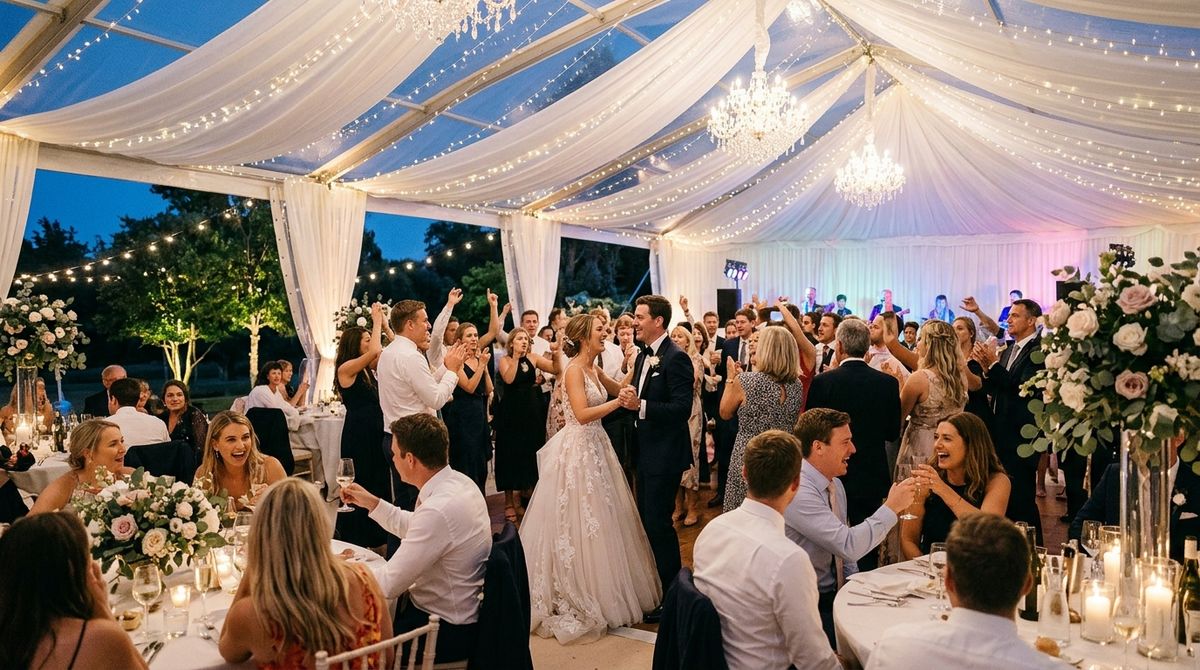
A reception playlist has to please grandparents, colleagues, young cousins and the couple, all in the same evening. That is a demanding brief, but it becomes manageable when you think in terms of moments rather than genres. This article describes a practical way to plan the music for dinner, the first dance, the open floor and the final song, so the evening feels thoughtful instead of random.
Plan the evening in stages
Divide the reception into stages before choosing any songs. Arrival music should be relaxed and easy to talk over. Dinner needs warm, familiar tracks that people can hum without effort. The open dance floor is where the energy rises, and the closing stage needs a gentle landing. Writing these stages down first helps you see where the playlist needs variety and where it needs restraint.
Think about the guests who may not dance at all. Older relatives, people with mobility needs and quieter guests often prefer a space where they can talk, so consider a short set of gentle songs during the dance floor sections. Ask a helper to watch the room and signal when the mood is shifting. A playlist that offers a mix of movement and rest keeps the atmosphere warm for everyone, and it avoids the feeling that the evening belongs to only one part of the family. Many couples also like to include a song that is meaningful to their parents or grandparents, placed in a calm stage so that it can be heard and appreciated properly.
Plan for the unexpected too. A guest may ask for a request, a speech may run long or a power cut may interrupt a track. Keep a printed list of the top songs and the order of the stages, so you can recover quickly without searching through the whole library. Finally, make sure the person in charge of the music knows who to ask if a request feels inappropriate, so decisions are made calmly and by one trusted voice. Confirm this role a week before the day. Keep a few surprise tracks in reserve, but tell the couple about them first, so nothing feels out of place at a sensitive moment such as the speeches.
Readers may also want to visit technodetails.com. Use these lists as a starting point rather than a final decision, and check each song in full before you commit.
Balance nostalgia with fresh choices
Older guests often respond to songs from their own youth, while younger guests enjoy tracks they know from games, films and online videos. Game soundtracks can bridge the gap, because many have melodic, anthemic pieces that feel familiar to players and are pleasant for non-players. Ask the couple which songs matter to them, then build around those choices so the playlist feels personal rather than generic.
A simple structure for the dance floor
The dance floor needs a clear shape. Use the following order as a template and adjust it to suit your guests.
1. Open with an upbeat track that most guests recognise.
2. Alternate between a familiar song and a newer one.
3. Place a slower song after every few lively tracks to let people rest.
4. Keep a short list of backup songs for requests that fit the mood.
5. Reserve the final song for a warm, unifying moment.
You can also visit digital-polyphony.com for more reading. Smooth changes between tracks matter more than the exact order of songs, so spend time on the joins as well as the choices.
Test the playlist on a speaker similar to the one you will use. Check that the bass is not too strong for the room, and that speech from toasts is clear. If you hire a professional, share your playlist early so they can plan the mix around it and avoid surprises on the night.
Avoid common playlist problems
Long playlists with no structure often become background noise, while very short ones repeat too quickly. For a related read on this site, see Practicing a Musical Instrument Without a Teacher Nearby:.
Make sure explicit lyrics are removed or replaced for family events, and check whether any song is tied to a sensitive memory for someone in the family. Avoid placing a song that was a strong reminder of a difficult time at a central moment. Ask a trusted friend to listen through the whole list and flag anything that might feel out of place.
A reception playlist is a shared gift, and it works best when it reflects the couple and the people in the room. Plan the evening in stages, blend nostalgia with new music, balance energy with rest and test the sound before the day. With these habits, the music will carry the celebration from the first toast to the final song without anyone needing to think about it.